Convo
Designing for specific users - 2022
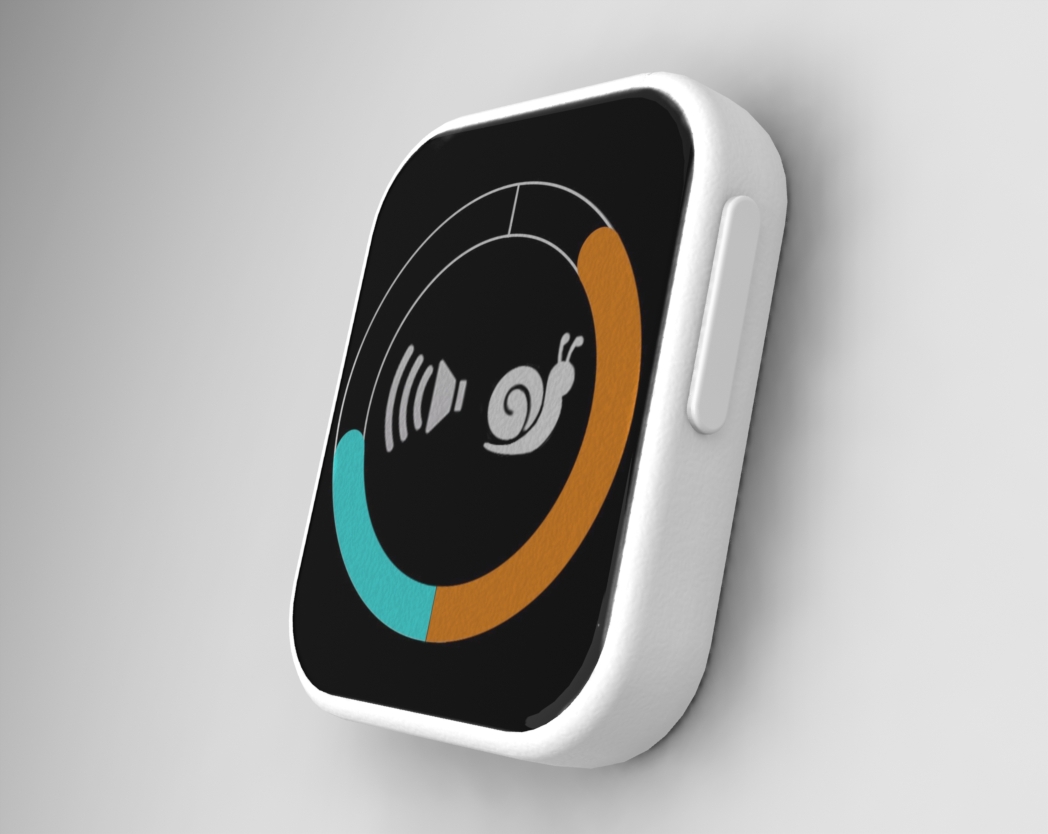
This is a group project from my second study year. With our design we won the Jury’s Choice Award.
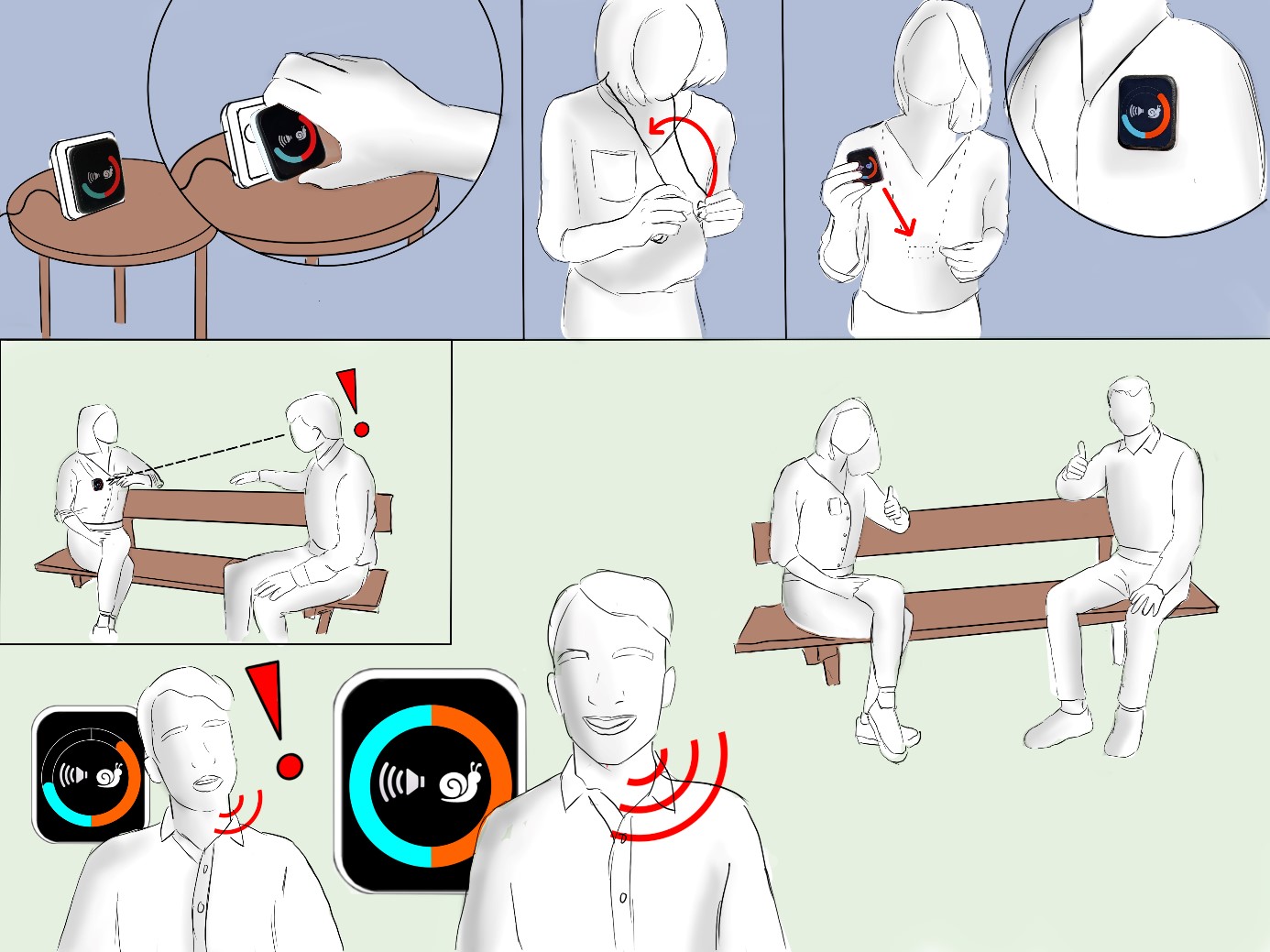
Let’s start exploring the world with Convo! This device helps audio impaired people with communication. Speech speed and speech volume are measured using special measuring equipment. The measured values are translated to effective feedback for the interlocuter. Communication thus becomes easier.
With this project we won the Jury’s Choice Award, a price for the best project of the module. Among the jury were Dr Ir. Wouter Eggink and Dr Ir. Edwin Dertien, both researchers at University of Twente and famous from the Dutch television program ‘’We gaan het maken’’ where they made special devices for impaired people.
U-Today wrote short article about our project ‘’Convo’’. It can be found clicking the button below.
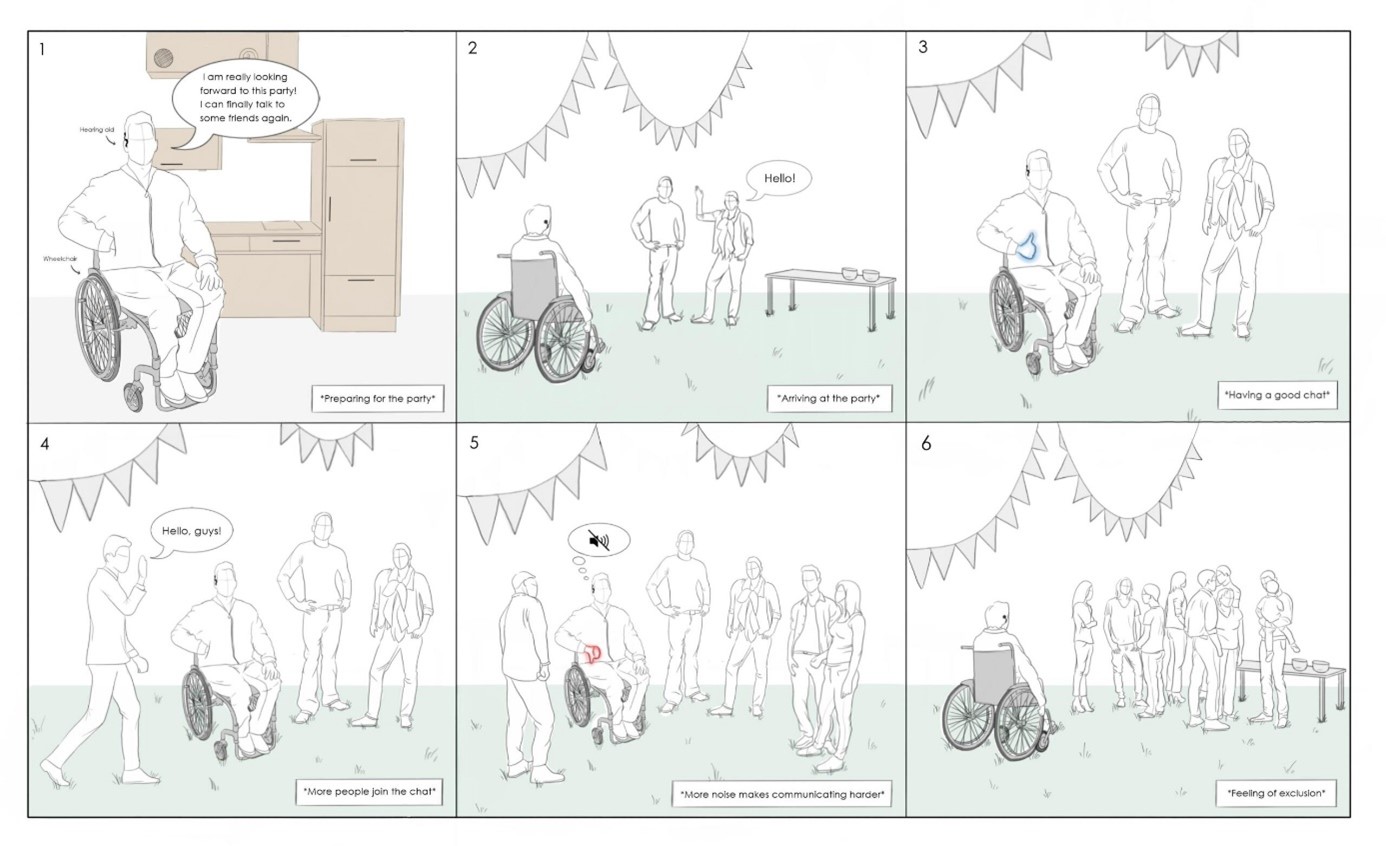
We started the project with a Context Mapping studie. We conducted a research about designing for people who are impaired. Because we had to design for a person who was audially- visually- and physically impaired, we researched all these handicaps. We found that Human-Centred Design can be helpful to find a solution for our participant. It became clear that communication was the biggest problem, so we wanted to come up with a solution for this problem. We concluded the Context Mapping study by making a storyboard to be able to explain the problem of communication in a better way.
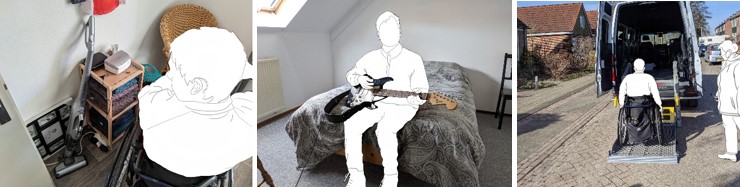
WWe did co-design sessions with our participant. It is important that they are able to contribute to the solution, because it is specifically for them. We learned during ‘’Day with the participant’’ that they had a sight of 5-6% and hearing of 70% when assistive devices were used. We used four different types of co-design on that day: Day reconstruction, sensibilisations, brainstorm sessions and house safari. The participant let us know they encounter a lot of small problems, like not being able to read a measuring cup. However, we concluded that these small problems originate from big, underlying problems: lack of mobility, independence and communication. Our group found that last one to be the most important, because they can get socially isolated. Therefore, we started to tackle this problem.
With the information from the Context Mapping study and co-design session we started the ideation. We looked at a wide variety of concept ideas and solutions to the problem of communication. Meanwhile we kept the design challenge and list of requirements in our heads. We went through six phases and every phase we got closer to the solution. In between the phases we asked for opinions and advises from our participant and diverse experts. In the end there were three concepts left.
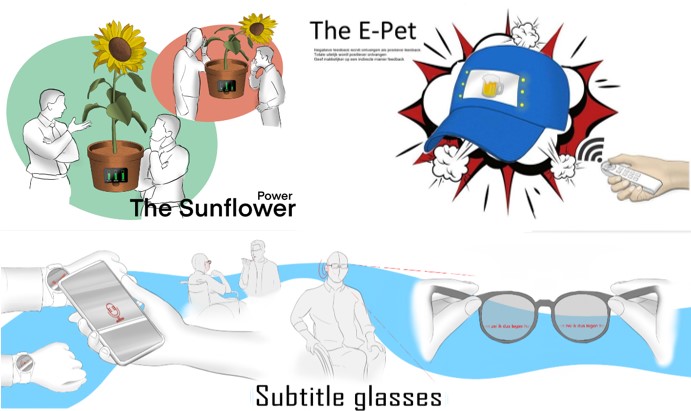
The idea of the sunflower is that the interlocuter gets direct feedback about its speech. The flower is hanging down if the interlocuter is speaking unclear and is standing upright if the participant can clearly understand everything.
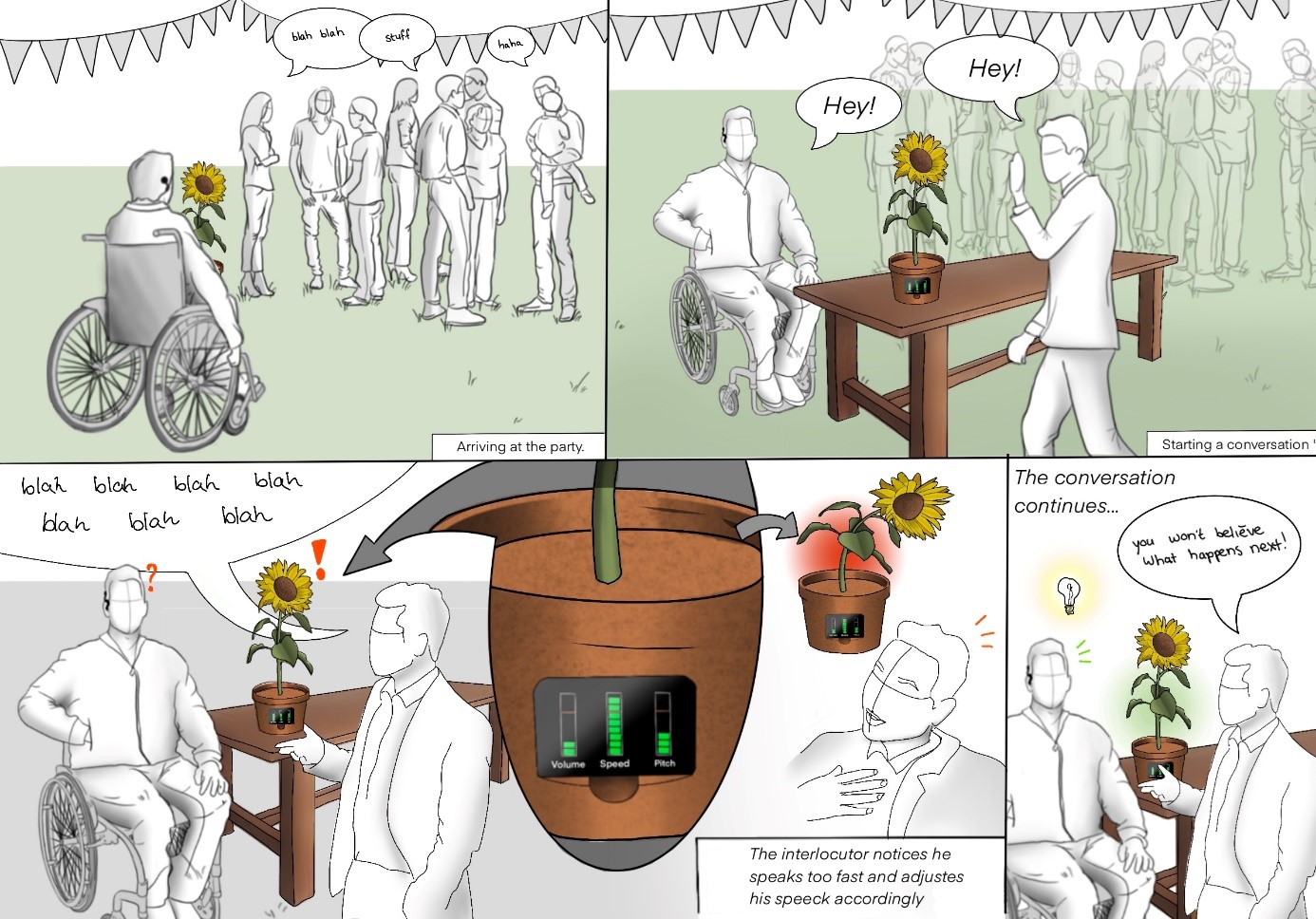
Based on our research and the opinion of our participant and various experts we choose to continue with this concept. We started looking at ways to clearly give feedback and how the final product should look like. The product should not be stigmatising and it should not draw to much attention.
After we had contact with a mechanical engineer (also a caretaker of the participant) we concluded that the device should be as close to the ear as possible, because the speech speed and speech volume would be the most accurate. We thought about integrating the device in a piece of clothing, but this is season- and preference related. In the end we concluded that the shape of a button would most agree with our requirements.
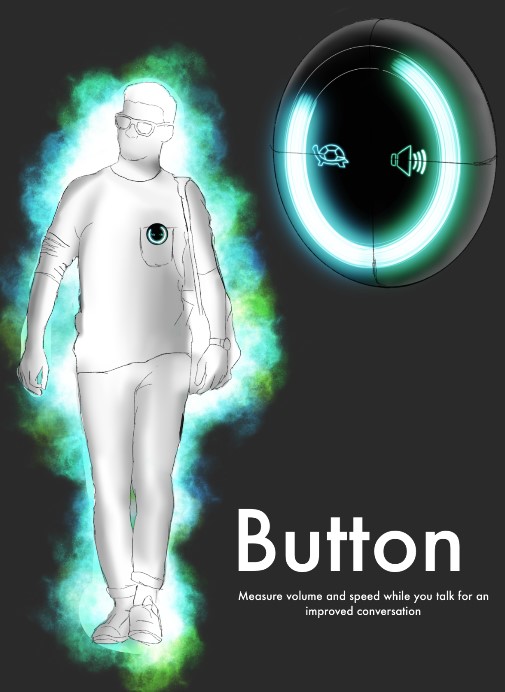
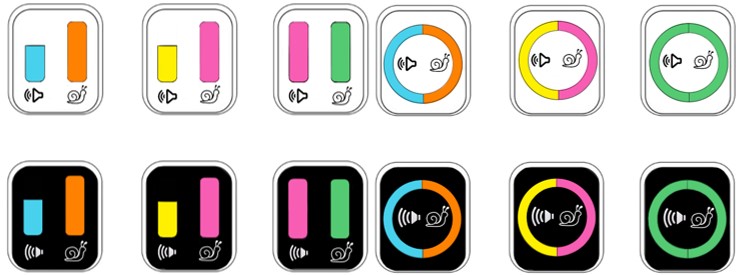
For the interface of the button we chose a screen over a mechanical interface, because a screen has more options and has a cleaner appearance. We made a template of the interface for ideation. The varying interfaces were analysed using literature research and by doing user testing with diverse people. The final design is suitable for colourblind people, readable in the sun, visible from a distance and has clear icons.
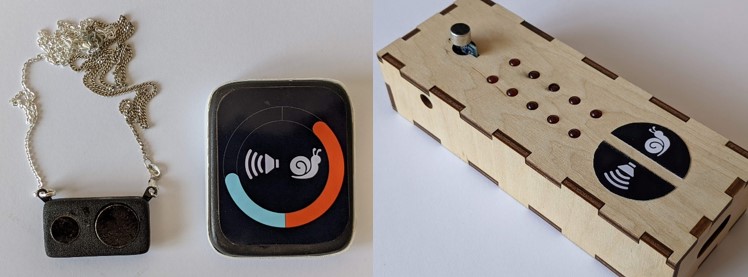
We made two prototypes: a visual prototype and a functional prototype. The visual prototype showed how the product will look like in real life and consisted of two parts: the button ad the necklace. The functional prototype was a proof of concept and thus showed that it is possible to measure speech volume and speech speed with the product. The volume is measured with a sound meter and an Arduino. The LEDs at the left show the height of the volume. The amount of LEDs which will light up depends on the DB value which is reached. The LEDs on the right show the speech speed. The more LEDs are lighted, the slower a person speaks. We used to program Inton Trainer for this. This software is not available for Arduino, but does work with a smartphone with Bluetooth connection. The feedback from the software is manually transferred from the phone to the Arduino. Then a certain amount of LEDs can be turned on.
The website of Convo can be visited by clicking the button below.
Personal contributions to the project
During the project I was responsible for the planning. I made sure all phases were planned and that the work was submitted in time. Next to this, I did a lot of theoretical and practical work for the project, like making a persona, researching methods to fasten the button, making storyboards, testing interfaces with diverse people and making the functional prototype. I learned a lot about designing for a specific target group. You need other design strategies than when designing for a large group.