Crime Reporting System
User Centered Design of New Media - 2024
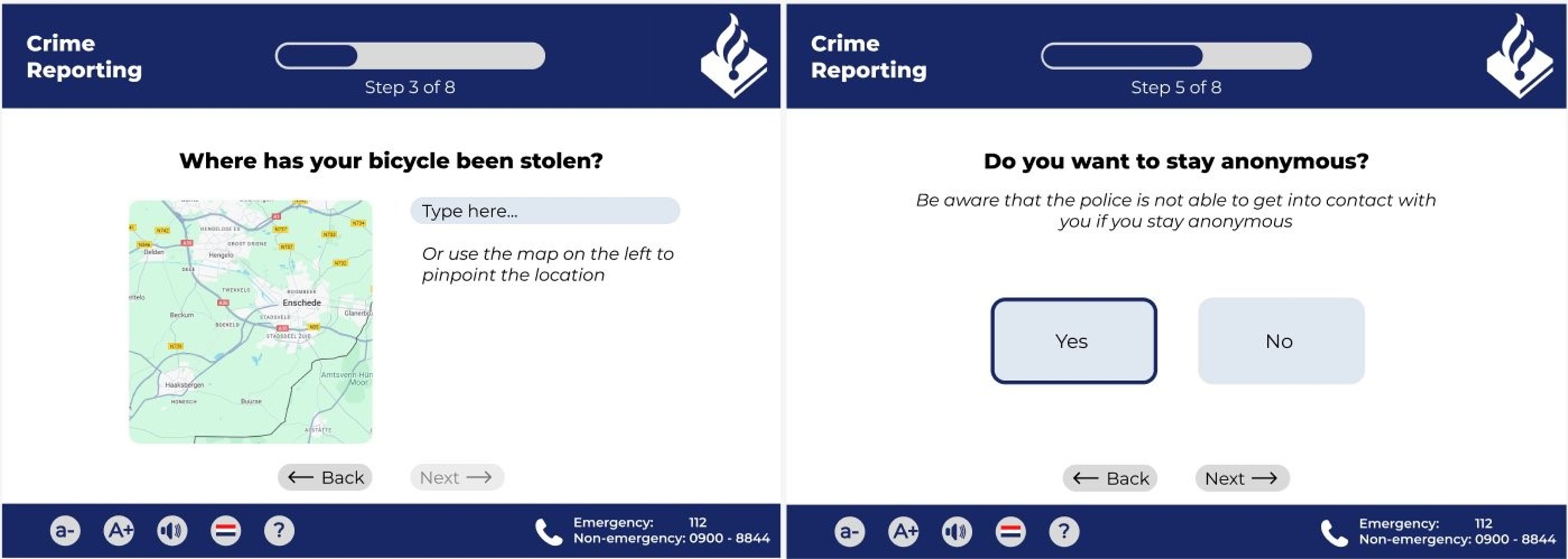
This group project was focused on practicing with the ‘’User Centered Design Process’’. This means the designer should focus on the (end)user of their design. Part of this is gathering information directly from the user. This can be done via interviews, observations, or co-design sessions to name a view options. Within this project three different techniques from the user centered design method were applied, with the main goal of improving the online crime reporting system on the website of the Dutch police.
The first step of the design process was doing desk research. This included that we took a critical look at the current crime reporting system to see if we were able to use is with ease. Next to this, we looked at digital crime reporting forms of foreign police websites to find differences and similarities. Lastly, the guidelines for governmental websites were inspected, as the redesigned website should adhere to these guidelines.
To create a better understanding of the users of the Dutch police website a survey has been executed. It included questions about crime reporting and preferences on this subject – visiting a police station, having a phone call, or using the website. We found that, on average, people mostly use the website for small crimes – for instance a stolen bike. Bigger crimes – for example burglary – was preferably reported via a physical visit to the police station.
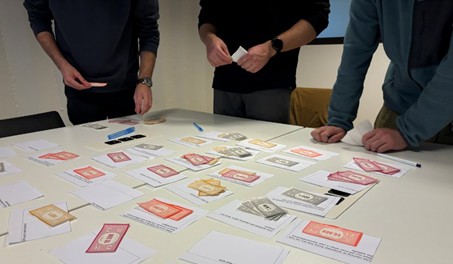
This information marked the start for the design phase. This phase was introduced by a co-design session consisting of two activities. The goal of this session was to create a first redesign for the website, together with (possible) end users. The participants of the session mentioned functions they found important – and which we did not think about before. The first activity was called ‘’Buy a Feature’’. Participants each got a set amount of play money. They had to distribute this over a variety of website function which lay spread out on a table. There were more functions than the participants had money, so they needed to set priorities. By doing this activity we were able to discover which functions were most important for the participants.
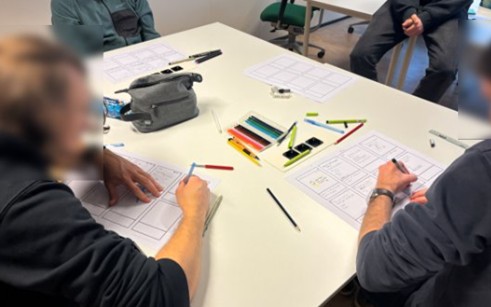
The second activity of the co-design session was drawing a storyboard. The participants were given a scenario – your bike is stolen in front of your house, you want to report this online and stay anonymous while doing so – a worksheet consisting of an empty comic strip and several writing and drawing supplies. The results of this assignment gave an overview of the steps the participants thought were logical to go through.
The results of the co-design session did form the basis of the redesign which was made using Figma. We made sure to include the functions which were mentioned multiple times by the participants as being important.
The redesign was tested by executing a user test in which participants were asked to anonymously report their stolen bike via the website. After performing the task with the prototype, the participants were asked to perform the same task on the current police website. This led to a comparison between both interfaces. From this, we could conclude that our redesign was more user-friendly than the current website of the Dutch police. However, there was still some room for improvement, if this redesign would be integrated in the current system.
The report and prototype belonging to this project can be found via the buttons below.
Personal contribution to the project
Within this project I mostly took the task of preparing for the ‘’user-sessions’’. I made the survey, co-design materials and the prototype in Figma. Next to this, I took the role of facilitator during the co-design session. This meant that I led the session and answered the questions from the participants. I also performed a validation test with a participant during the last phase of the project. While doing this project I gathered new experiences related to the user centered design process. These can support me in learning how to better understand the (end) users of my future designs.